


Root Canals in St. John, Indiana | Relief for Infected Teeth
At St. John Premier Dental, we offer root canals in St. John, Indiana, to treat oral infections and prevent the need to extract damaged teeth. Root canals use modern dental tools to remove infected pulp from inside the tooth, while preserving the outer structure to save the tooth.
If bacteria spread throughout the tooth and affect the inner pulp, then an infection, pain, and swelling can develop. Not only is this infection painful, but it can also lead to health complications if the infection spreads. A root canal treatment is a way to eliminate the infection and prevent complications, with the goal of maintaining as much of your natural tooth structure as possible.
Our skilled team at St. John Premier Dental offers root canals using high-tech digital imaging. Come to our local dental office in St. John, Indiana, so that we can relieve your pain, protect the jawbone, and restore your dental function as quickly as possible. Root canals are a safe and effective way to save your tooth and minimize the risk of dental complications in the future.
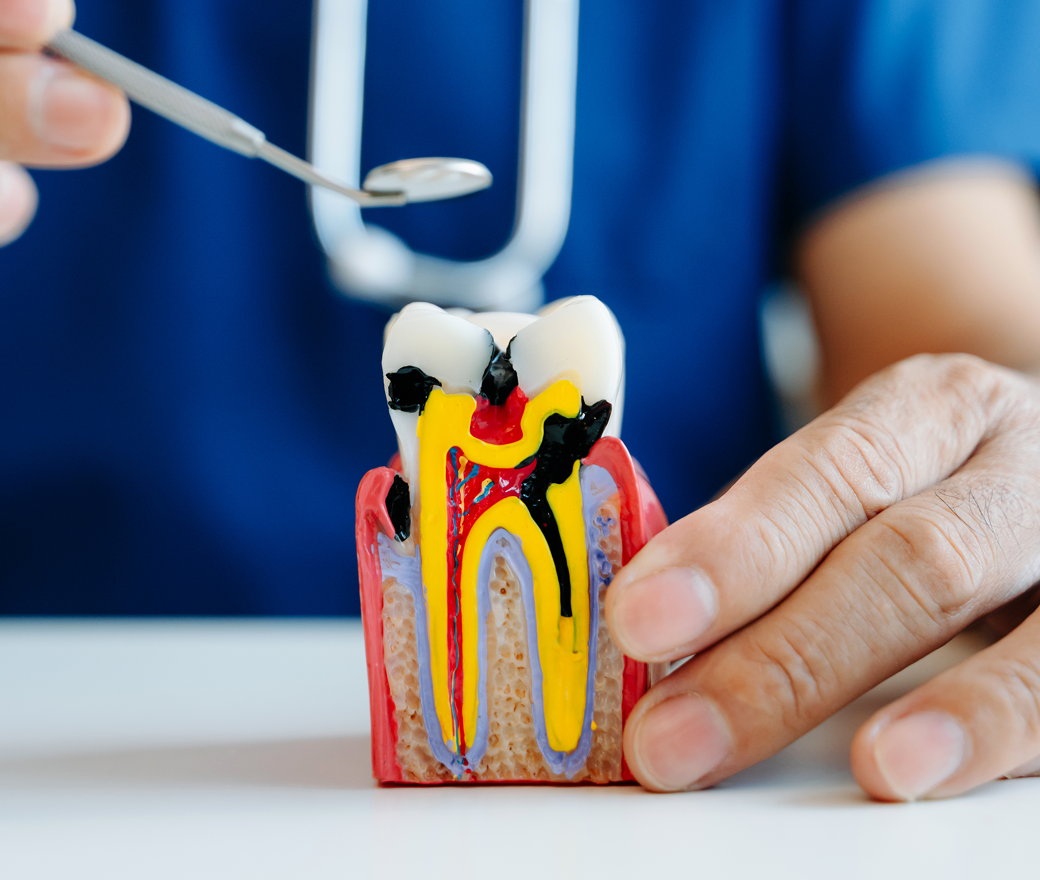

What Are Root Canals?
A root canal treatment involves drilling into the tooth so that the infected pulp tissue inside can be removed. This pulp is where the nerves and blood vessels are located, which means that the infection often causes severe pain. These symptoms are eliminated with this treatment, making it possible to avoid tooth extraction and save the structure of the tooth.
After the pulp is removed, the root canal dentist must clean out all of the internal canals (the roots of the tooth) and disinfect the inside of the tooth. Finally, it is sealed to reduce the risk of reinfection in the future. Root canal fillings are used in the open space, and it’s common for a stronger restoration to be placed on top of the tooth, such as a crown.
Removing the infection allows the tooth to stay in place, and the treated tooth can last for many years with proper care and oral hygiene.
When Are Root Canals Recommended?
Root canals are recommended for patients who have infected pulp tissue, often caused by decay, cracks, or trauma that allowed bacteria to get into the tooth. If the infection is left untreated, it could allow the infection to spread to nearby teeth and the surrounding tissues, resulting in more serious complications in the future. So, it’s best to treat the tooth as soon as possible. Sometimes, emergency dental services are needed because the infection is causing so much pain.
Some of the most common signs that you need a root canal include:
Persistent or worsening tooth pain
The tooth is sensitive to hot or cold temperatures
Gum swelling around the tooth
The tooth starts turning a darker color
A patient wants to use dental crowns for cosmetic reasons
An abscess forms at the base of the tooth
If you have any of these symptoms, then it’s essential to visit a root canal dentist as soon as possible. We’ll complete a thorough examination and determine the underlying cause of your dental issues. Proactive root canal treatment can reduce the risk of tooth loss and other more invasive dental treatments.
Benefits of Root Canals
The main benefit of root canal therapy is to preserve an infected tooth instead of extracting it. This treatment is common, and modern technology makes it as simple as getting a filling. Some of the other benefits of root canals include:
Infection Removal
It’s essential to remove the infected pulp and eliminate bacteria to prevent the infection from spreading to other parts of the mouth or throughout the body.
Pain Relief
Root canals often provide immediate pain relief for patients with severe, persistent toothaches. Removing the nerves alleviates the discomfort.
Tooth Preservation
Avoid tooth extraction, which allows you to talk and eat normally. When the tooth is preserved, there is no need for further restorative treatments such as dental implants.
Bone Protection
Preventing the spread of infection helps to reduce the risk of bone density loss in the affected area. Plus, keeping the tooth in place also preserves the bone.
The Root Canal Procedure Explained
Your dentist will use digital imaging to determine if you need endodontic treatment. These images give insight into what is happening under the gumline and the extent of the infection. Before starting the treatment, a local anesthetic is used to numb the area and ensure your comfort.
Then the dentist drills into the tooth to access the pulp chamber and canal system. The infected tissue is removed, the area is disinfected, and then a root canal filling is used to seal the inside of the tooth.

Typical Steps of Root Canal Treatment Include:
Examination with digital X-rays to assess the infection
Numbing the treatment area with local anesthetic
Drilling into the tooth to access the pulp chamber
Removing the infected tissue
Cleaning and shaping the tooth canals
Placing a root canal filling inside and sealing the tooth
Final restoration placement to reinforce the remaining tooth structure

Why Patients Choose St. John Premier Dental for Root Canals
At St. John Premier Dental, we offer root canal therapy using modern methods and high-tech equipment, which is why many patients choose our experienced team. Not only is our dental office located close to you in St. John, Indiana, but we also offer a full range of services for the whole family.
Choosing a skilled dentist near you is one of the best ways to maintain a smile that lasts a lifetime. Our conservative, proactive approach is designed to preserve your natural teeth and protect your oral health.

Frequently Asked Questions About Root Canals
Modern root canals are similar to the experience of a basic filling. The treatment uses local anesthesia, so you shouldn’t feel any pain during the appointment.
What Our Patients Say
Dr. Peter Straka is just awesome. I always like seeing him. He is great with my children, and I will always appreciate his dedication and kindness....

This practice truly embodies all aspects of being premier. From the moment you walk through the door, you can tell the amount of detail that Dr Str...
Dr. Straka and the team at St. John Premier Dental provide outstanding care and professionalism. The office is welcoming, appointments are efficien...
Best dental experience ever! I typically don’t like going to the dentist, but this office is beautiful and relaxing. The staff and Dentists are wel...
I had a great experience with Dr. Straka and the team at St. John Premier Dental. They did an amazing job with my extraction and made the whole pro...
They were able to squeeze me in to get my crown adjusted, since I was experiencing pain and my normal dentist was not available. Really great and k...
Dr. Straka and his team are some of the most incredible humans i have ever had the pleasure of working with. The office is clean, convenient and ha...
I wanted to say that I am very excited for Dr Straka’s opening of his new office. I have known Peter for many years and believe that he is a very h...
Had an amazing experience at this office. The office itself is stunning and modern, and Dr. Straka is a true professional. Incredibly knowledgeable...
Had a good experience here. New to the area, as am I!! Hope they stay!!


Schedule an Appointment
We’re here to help you prioritize your smile. Our team at St. John Premier Dental is just a phone call away. We are located in St. John, Indiana and also serve the surrounding region. Give us a call or book your appointment online today.

Monday to Friday: 9AM–5PM
Saturday: 8AM–12PM
Sunday: CLOSED